Sunday, 2 July 2017

CBSE Class 8 - Social Science - Indian Constitution - Salient Features (#cbseNotes)

Salient Features of the Constitution

CBSE Class 8 - Social Science - Indian Constitution - Salient Features (#cbseNotes)

T
he Indian Constitution closely follows the British parliamentary model but differs from it in one important respect that is the Constitution is supreme, not the parliament. The Indian courts are vested with authority to act as a judge on the constitutionality of any law passed by parliament.


The present constitution consists of the following:
The Preamble
25 Parts covering 448 articles
12 Schedules and
5 Appendices containing the Panchayats and schedule XI (Articles 243 G)

The parliament of India adopted the constitution on 26th November 1949. The constitution became fully operational with effect from 26th January 1950.

In September 2016, there has been 101st amendment (GST Bill) to the Constitution of India. The salient features of Indian constitution are listed as follows:

Written Constitution
Lengthy document
Drawn from different sources
A Federal Polity with unitary bias
Single citizenship
More flexible than rigid
A Democratic Republic
Balance between Judicial Supremacy and parliamentary
Universal adult franchise
Secular state
provision of provision of fundamental rights
Principles for a welfare state
Incorporation of fundamental duties
Emergency provisions
Protection of minorities
Provision for autonomous organisation


Saturday, 1 July 2017

CBSE Class 12/NTSE - Macroeconomics - Money and Banking - Inflation Related Terms (#cbseNotes)

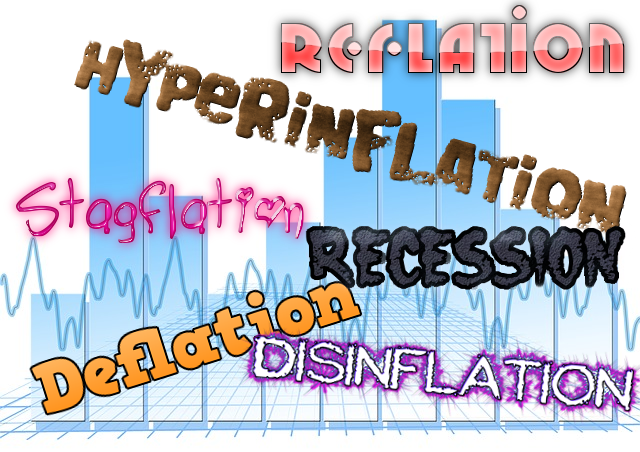
Inflation Related Terms

CBSE Class 12/NTSE - Macroeconomics - Money and Banking - Inflation Related Terms (#cbseNotes)

Deflation 
Deflation is that state of the economy where the value of money is rising or the prices are falling.


Hyperinflation
Extremely Rapid and out of control inflammation inflation is said to be hyperinflation.


Stagflation 
A condition of slow economic growth and relatively high unemployment - a time of stagnation - accompanied by a rise in prices on inflation.

Friday, 30 June 2017

CBSE Class 6 - Science - The living Organisms and Their Surroundings (Worksheet) (cbseNotes)

The living Organisms and Their Surroundings (Worksheet)

CBSE Class 6 - Science - The living Organisms and Their Surroundings (Worksheet) (cbseNotes)

Based on NCERT Class 6 Science Textbook 

Fill in the blanks by choosing the right word from the following set of words. 

terrestrial, blowholes, gills, abiotic, ostrich, pines, habitat, stimuli, aquatic, webbed, omnivores, casuarina, locomotion, excretion, chicken

The surroundings where plants and animals live, is called their _________.

___________ egg is the biggest cell in nature.

There are many types of habitats, however, these may be broadly grouped as __________ (on the land) and ________ (in water).

_________ are the respiratory organs of fish.

CBSE Class 12 - Computer Science - C++ Practical Class Design Snippet-5 (#cbseNotes)

C++ Practical
Class Design Snippet-5

CBSE Class 12 - Computer Science - C++ Practical Class Design Snippet-5 (#cbseNotes)

Question :  Write a program to open a file in C++ "Hello.dat" and write

This is only a test
Nothing can go wrong
All things are fine

into the file. Read the file and display the contents.


Answer:

Thursday, 29 June 2017

CBSE Class 8 - Science - Friction (MCQs) (#cbseNotes)

Friction (MCQs)

CBSE Class 8 - Science - Friction (MCQs) (#cbseNotes)

CBSE Class 8 - Science

Q1: The force of friction which opposes the surfaces just to slide one over the other, is called:

   (A) Limiting friction.
   (B) Rolling friction
   (C) Sliding friction
   (D) All of these.


Q2: What is the most common way to reduce friction?

(A) Lubrication.
(B) Warning signs.
(C) Eliminate the motion.
(D) None of these.


Q3: Do you want to increase or decrease friction when riding a bicycle?

(A) Increase.
(B) Both.
(C) Decrease.
(D) None of these.


Wednesday, 28 June 2017

CBSE Class 6 - Civics - Key Elements of a Democratic Government (Q and A) (#cbseNotes)

Key Elements of a Democratic Government
(Q and A)


Q & A based on NCERT CLASS 6 TEXTBOOK

CBSE Class 6 - Civics - Key Elements of a Democratic Government (Q and A) (#cbseNotes)

Q1: Name the three key elements that influence the working of a democratic government?

Answer:
people's participation,
the resolution of conflict and
equality and justice.


Q2: What is the meaning of the word 'Apartheid'?

Answer: It means separation on the basis of race.


Q3: What were the Apartheid laws in South Africa?

Answer: South African people were divided into black, white and coloured races. According to the law, these races were not allowed to mingle with each other, to live near each other or even to use common facilities. e.g. there were separate trains for the blacks and the white people. Thus blacks and coloured people were not considered to be equal to whites.


Q4: Name the leader of African National Congress who led the struggle against apartheid.

Answer: Nelson Mandela


Q5: When did South Africa become a democratic country.

Answer: In 1994 South Africa became a democratic country that ended Apartheid laws.


Q6: What were Hector and his classmates protesting about?  

Answer: Hector and his classmates protested against learning the Africans language in school. This was the language that white spoke. They were forced to learn this language, but they wanted to learn their own language Zulu.


Q7: Name the language spoken by white people of South Africa.

Answer: Afrikaans

Tuesday, 27 June 2017

CBSE Class 10 - Chemistry - 23 HOTS Questions on Chemical Reactions You Must Know - Q and A (#cbsenotes)

23 HOTS Questions on Chemical Reactions You Must Know

CBSE Class 10 - Chemistry -  23 HOTS Questions on Chemical Reactions You Must Know - Q and A (#cbsenotes)

Class 10 - Chemistry - Q & A

Q1: A white coloured water insoluble substance X on reacting with dilute H₂SO₄ released a colourless and odourless gas accompanied by brisk effervescence. When the gas was passed through water, the solution obtained turned blue litmus red. On bubbling the gas through lime water, it initially became milky and milkiness disappeared when the gas was passed in excess. Identify the substance X‘. Write its chemical equations of the reactions involved.

Answer: Calcium carbonate on reacting with dilute sulphuric acid releases a colourless and odourless gas carbon dioxide accompanied  by brisk effervescence.

The chemical equation for this reaction is
CaCO₃ + H₂SO₄ → CaSO₄ + H₂O + CO₂

Ca(OH)₂(aq) + CO₂(g) → CaCO₃(s) + H₂O(l)
milky

CO₂ (g) + CaCO₃ (s) + H₂O (l) ⇌ Ca(HCO₃)₂ (aq)
(colourless)


Q2: Ahmad took a magnesium ribbon (cleaned) and burned it on a flame. The white powder formed was taken in a test tube and water was added to it. He then tested the solution formed with red and blue litmus paper. What change was seen? Why?


Answer:
Red litmus paper turned blue.
Blue litmus paper remained blue.

This is because the magnesium ribbon on burning in air forms the white magnesium oxide. MgO when dissolves in water, it forms magnesium hydroxide, which is basic in nature.

2Mg + O₂ → 2MgO

MgO + H₂O → Mg(OH)₂ (aq) + H₂(g)