Tuesday, 19 June 2018

CBSE Class 12 - Business Studies - What is Organizing and its importance? (Q and A) (#cbsenotes)(#eduvictors)

Organizing and its importance

(Q and A)


CBSE Class 12 - Business Studies - What is Organizing and its importance? (Q and A) (#cbsenotes)(#eduvictors)


Q1: Define organising.

Answer: Organising can be defined as a process that initiates implementation of plans by clarifying jobs, working relationships and effectively deploying resources for attainment of identified and desired results.

Therefore, it is a process, which coordinates human efforts, assembles resources and integrates both into a unified whole to be utilized for achieving specified objectives.


Q2: What is the significance of organising as a function to management?

Answer: Organising as a function to management leads to—

• Creation of organisational structure with suitable personnel.

• Designing specific roles to eliminate ambiguity.

• Defining inter-relationship among personnel for productive cooperation.

• Clarifying authority and responsibility for results and logical grouping of activities.


Monday, 18 June 2018

CBSE Class 9 - Geography - India land of diverse relief features (#cbsenotes)(#eduvictors)

India Land of Diverse Relief Features
CBSE Class 9 - Geography - India land of diverse relief features (#cbsenotes)(#eduvictors)
India Relief Features
credits: Sagredo, Wikipedia


Q: Write a short note describing India is a land of diverse relief features.

Answer:
India presents a picturesque landscape,  characterized by great diversity in its landforms with respect to relief, structure and rock formations.

The north has a vast expanse of highly rugged terrain consisting of the Himalayan mountain chain. The bold and youthful relief of these parallel ranges is largely composed of metamorphic and sedimentary rocks.

English Language Reading Comprehension Test - 12 (#cbsenotes)(#eduvictors)

Reading Comprehension 

Set - 12
English Language Reading Comprehension Test - 12  (#cbsenotes)(#eduvictors)


Read the following passage and answer the questions given below:

There are two problems which cause great worry to our educationists, the problem of religious and moral instruction in a land of many faiths and the problem arising out of a large variety of languages. Taking up the education of children, we see that they should be trained to love one another, to be kind and helpful to all, to be tender to the lower animals and to observe and think right. The task of teaching them how to read and write and to count and calculate is important, but it should not make us lose sight of the primary aim of moulding personality in the right way. For this, it is necessary to call into aid, culture, tradition and religion. But in our country we have, in the same school, to look after boys and girls born in different faiths and belonging to families that live diverse ways of life and follow different forms of worship associated with different denominations of religion. It will not do to tread the easy path of evading the difficulty by attending solely to physical culture and intellectual education. We have to evolve a suitable technique and method for serving the spiritual needs of school children professing different faiths. We would thereby promote an atmosphere of mutual respect, a fuller understanding and helpful co-operation among the different communities in our society. Again we must remain one people and we have therefore to give basic training in our schools to speak and understand more languages than one and to appreciate and respect the different religions prevailing in India. It is not right for us in India to be dissuaded from this by considerations as to overtaking the young mind. What is necessary must be done. And it is not in fact too great a burden. 

Sunday, 17 June 2018

Class 9 - Hindi B - एक फूल की चाह (सियारामशरण गुप्त) कविता का सारांश (#cbsenotes)(#eduvictors)

एक फूल की चाह 

सियारामशरण गुप्त 

Class 9 - Hindi B - एक फूल की चाह  (सियारामशरण गुप्त)  कविता का सहारा सारांश (#cbsenotes)(#eduvictors)

कविता का सारांश

यह सियारामशरण गुप्त जी की एक अति लोकप्रिय कविता है| प्रस्तुत पाठ उसी कविता का अंश मात्रा है। प्रस्तुत कविता छुआछूत की समस्या से संबंधित है| सुखिया नाम की मरणासन्न अछूत कन्या के मन में अचानक यह इच्छा उठी कि उसे देवी मां के चरणों में अर्पित किया हुआ फूल कोई लाकर दे दे|  

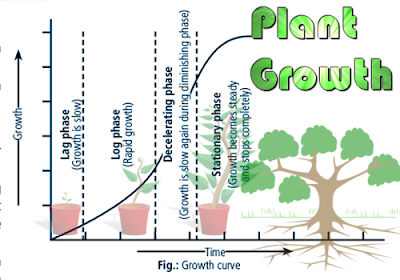
CBSE Class 11 - Biology - Understanding Plant Growth (#cbsenotes)(#eduvictors)

Understanding Plant Growth

CBSE Class 11 - Biology - Understanding Plant Growth (#cbsenotes)(#eduvictors)


Q1: Define growth.

Answer: Growth in an organism consists of a permanent and more or less irreversible increase in size, commonly accompanied by an increase in dry mass and amount of cytoplasm.


Q2: Define development.

Answer: The coordination of growth and differentiation of a single cell into multicellular tissues and organs is called development.


Q3: How the growth of living beings is different from non-living?

Answer: Growth in living beings is intrinsic or internal, in contrast to extrinsic growth observed in non-living objects.


Q4: How is plant growth different from animal growth?

Answer: Plant growth is generally indeterminate, i.e., continued throughout life while animal growth is non-continuous i.e. after a certain age, the ageing starts leading to death. In plants, the growth is diffused and localised while animal growth is uniform.


Q5: How plant growth is categorised?

Saturday, 16 June 2018

CBSE Class 9 - Geography - India: Size and Location (Very Short Questions and Answers)(#cbsenotes)(#eduvictors)

India: Size and Location 

(Very Short Questions and Answers)
CBSE Class 9 - Geography - India: Size and Location (Very Short Questions and Answers)(#cbsenotes)(#eduvictors)


Q1: Indian Standard Time or I.S.T. is how many hours ahead or behind of G.M.T. or Universal Time?

Answer: 5 hrs.30 min. ahead of G.M.T.


Q2: Which Canal has reduced India’s distance from Europe by 7000 km?

Answer: Suez Canal


Q3: The Standard Meridian of India, 82°30’E passes through which place in UP?

Answer: Mirzapur in Uttar Pradesh


Q4: From Arunachal Pradesh to Gujarat, there is a time lag of.....

Answer: 2 hours


Q5: Approximately what is the latitudinal and longitudinal extent of the mainland of India?

Answer: 30°


Friday, 15 June 2018

CBSE Class 12 - Physics - Wave Optics - Important Theory Questions (#cbsenotes)(#eduvictors)

Wave Optics

(Important Theory Questions)

CBSE Class 12 - Physics - Wave Optics - Important Theory Questions (#cbsenotes)(#eduvictors)

Q1. Define wave front. State Huygens principle and verify Snell’s law.

Q2. State Huygens principle and prove the laws of reflection on the basis of wave theory.

Q3. What do you mean by interference of light? Explain in brief the Young’s double slit experiment.

Q4. What are the coherent sources? Write the conditions for the sustained interference pattern. Also draw the intensity v/s path difference curve.