Thursday, 28 June 2018

CBSE Class 9 - Science - Matter In Our Surroundings - Reasoning Questions (#cbsenotes)(#class9Science)(#eduvictors)

Matter In Our Surroundings  Reasoning Questions

CBSE Class 9 - Science - Matter In Our Surroundings - Reasoning Questions (#cbsenotes)(#class9Science)(#eduvictors)


Q1: When 20-30g of salt is added to 500 ml of water in a beaker. We see salt dissolves and disappears in water. Give reasons for this.


Q2: If we put a drop of blue ink in a beaker filled with water and leave it undisturbed. Why does the water in the whole beaker turn blue?


Q3: Give reasons for the following observation:
The smell of hot sizzling food reaches you several metres away, but to get the smell from the cold food you have to go close.


Q4: Why is a diver able to cut through water in a swimming pool?


Q5: Sponge can be compressed. Why is it a solid?

Tuesday, 26 June 2018

CBSE Class 6 - Science - Food: Where Does It Come From? - Extra Q & A (#cbsenotes)(#eduvictors)

Food: Where Does It Come From?

Extra Q & A
CBSE Class 6 - Science - Food: Where Does It Come From? - Extra Q & A (#cbsenotes)(#eduvictors)

Q1: Why do we need food?

Answer: We need food
a. To get energy
b. To do work
c. To repair our body

Q2: Categorize the nutrients on the basis of their functions.

Answer: The nutrients on the basis of their functions are-
a. Energy Giving Food – Carbohydrates and Fats
b. Body Building Food - Proteins
c. Protective Food – Vitamins and Minerals


Q3: Name the food items which are the rich sources of energy giving food.

Answer: The food items which are the rich sources of energy giving foods are rice, wheat, corn, potato, sugar, bread etc.


Q4: Name the food items which are the rich sources of body building food.

Answer: The food items which are the rich sources of body building food are milk, egg, cheese, fish, beans and pulses.


CBSE Class 9/ Class 11- Biology - Nehemiah Grew - Father of Plant Anatomy (#PMtNotes)(#cbsenotes)(#eduvictors)

Nehemiah Grew - Father of Plant Anatomy

CBSE Class 9/ Class 11- Biology - Nehemiah Grew - Father of Plant Anatomy (#PMtNotes)(#cbsenotes)(#eduvictors)

Nehemiah Grew (26 September 1641 – 25 March 1712) was an English plant anatomist and physiologist, known as the "Father of Plant Anatomy".

Nehemiah Grew (1641-1712) was practicing physician and worked as the secretary of the Royal Society, London. He began his work on the study of internal structure of the plants in the year 1664.

Sunday, 24 June 2018

CBSE Class 12 - Physics - CH: Atoms and Nuclei - Cathode Rays and Its Properties (#cbsenotes)(#class12Physics)(#eduvictors)

Cathode Rays and Its Properties

CBSE Class 12 - Physics - CH: Atoms and Nuclei - Cathode Rays and Its Properties (#cbsenotes)(#class12Physics)(#eduvictors)
Image Credits: Wikipedia, Author: Theresa Knott


Q1: What are Cathode Rays?

Answer: are streams of electrons observed in vacuum tubes. These rays were discoevered by a German physicist Johann Wilhelm Hittorf, and were named in 1876 by E. Goldstein, or cathode rays. In 1897, British physicist J. J. Thomson experimented and showed that cathode rays were composed of negatively charged particles, called electrons. Cathode rays are also called as electrons beam.

When a potential difference of 10 to 15 kV is applied across the two electrodes of a discharge tube and pressure is reduced to 0.01mm of mercury, the rays known as cathode rays are emitted from the cathode. These rays are independent of the nature of the gas in the discharge tube and their direction of propagation is not affected by the position of the anode.


Q2: What are the properties of Cathode Rays?

Saturday, 23 June 2018

CBSE CLASS 12 - Business Studies - NATURE AND SIGNIFICANCE OF MANAGEMENT (Q and A) (#cbsenotes)(#class12BusinessStudies)(#eduvictors)

NATURE AND SIGNIFICANCE OF MANAGEMENT(Q & A)

CBSE CLASS 12 - Business Studies - NATURE AND SIGNIFICANCE OF MANAGEMENT (Q and A) (#cbsenotes)(#class12BusinessStudies)(#eduvictors)


Q1: Explain the meaning of management. What do you mean by managers?

Answer: Management is a process of getting things done with the aim of achieving desired common goals effectively and efficiently persons engaged in performing the functions of the management are known as managers. In other words, those managing the organisational resources for releasing its goals are known as managers.


Q2: ‘Management is a process’ Explain?

Answer: Management includes various steps such as planning, organising, staffing, directing and controlling. This process begins with those at the top of the organization and continues to varying degrees at almost every level of the organisation. These inter-related steps help to achieve organisational goals in an effective manner. That is why management is known as the process of employing and organising resources to accomplish predetermined objectives.

Friday, 22 June 2018

CBSE Class 10 - Economics - Chapter 1 - Introduction of Economics - Worksheet (#cbsenotes)(#eduvictors)

Introduction of Economics 

Worksheet

CBSE Class 10 - Economics - Chapter 1 - Introduction of Economics - Worksheet (#cbsenotes)(#eduvictors)

Fill in the blanks.

1. Economics is a _____ science. (physical, social, natural)


2. Economics studies man’s ____ behaviour in society. (economic, social, political)


3. The Greek word “OIKONOMIA” means _______. (household, household management, household science)


4. _____ is considered as the Father of Economics.

Thursday, 21 June 2018

Career After 12: A big list to choose your career (#careerAfter12)(#eduvictors)

A Big List to Choose Your Career

Here is a partial big list of career streams that you can choose after completing your class 12. Set your goals and choose the right career and lead a happy life.

Career After 12: A big list to choose your career  (#careerAfter12)(#eduvictors)


ACCOUNTING, BANKING, FINANCE AND INSURANCE
• Accountancy
• Actuarial Science
• Auditing
• Bank Probationary Officer
• Banking
• Chartered Accountancy
• Company Secretary
• Finance Management
• Forensic Accounting
• ICWAI(ICAI)
• Insurance
• Insurance Underwriters
• Investment Management
• Mathematics
• Securities Analysts
• Statistician
• Taxation


Wednesday, 20 June 2018

CBSE Class 10 - Nationalism In India (Very Short Q and A)(#cbsenotes)(#eduvictors)

Nationalism In India 

(Very Short Q and A)

CBSE Class 10 - Nationalism In India (Very Short Q and A)(#cbsenotes)(#eduvictors)


Q1: What was Mahatma Gandhi's idea of satyagraha?

Answer: Mental strength is more powerful than physical force to win the heart of the oppressor. The power of truth and the need to search for truth was the philosophy of satyagraha.
This novel idea of Satyagraha was first time implemented by Gandhiji in South Africa.


Q2:  Name two Satyagraha movements led by Mahatma Gandhi.

Answer:
Champaran movement in 1916– to inspire plantation workers to struggle against
In 1917 Satyagraha at Kheda -to support peasants


Q3: Who is the author of 'Hind Swaraj'?

Answer: Mahatma Gandhi.


Q4: When and where did Jallianwalla Bagh Massacre happen?

Answer: On 13th April 1919 in Amritsar in Punjab.


Tuesday, 19 June 2018

Class 9 - Mathematics - Ten Parallelogram Theorems You Must Know (#cbsenotes)(#eduvictors)

10 Parallelogram Theorems - You Must Know


CLass 9 - Mathematics - Ten Parallelogram Theorems You Must Know (#cbsenotes)(#eduvictors)


Theorem 1: A diagonal of a parallelogram divides it into two congruent triangles.
See proof here

Theorem 2: In a parallelogram, opposite sides are equal.
See proof here

Theorem 3: If each pair of opposite sides of a quadrilateral is equal, then it is a parallelogram.
See proof here

Theorem 4: In a parallelogram, opposite angles are equal
See proof here

CBSE Class 12 - Business Studies - What is Organizing and its importance? (Q and A) (#cbsenotes)(#eduvictors)

Organizing and its importance

(Q and A)


CBSE Class 12 - Business Studies - What is Organizing and its importance? (Q and A) (#cbsenotes)(#eduvictors)


Q1: Define organising.

Answer: Organising can be defined as a process that initiates implementation of plans by clarifying jobs, working relationships and effectively deploying resources for attainment of identified and desired results.

Therefore, it is a process, which coordinates human efforts, assembles resources and integrates both into a unified whole to be utilized for achieving specified objectives.


Q2: What is the significance of organising as a function to management?

Answer: Organising as a function to management leads to—

• Creation of organisational structure with suitable personnel.

• Designing specific roles to eliminate ambiguity.

• Defining inter-relationship among personnel for productive cooperation.

• Clarifying authority and responsibility for results and logical grouping of activities.


Monday, 18 June 2018

CBSE Class 9 - Geography - India land of diverse relief features (#cbsenotes)(#eduvictors)

India Land of Diverse Relief Features
CBSE Class 9 - Geography - India land of diverse relief features (#cbsenotes)(#eduvictors)
India Relief Features
credits: Sagredo, Wikipedia


Q: Write a short note describing India is a land of diverse relief features.

Answer:
India presents a picturesque landscape,  characterized by great diversity in its landforms with respect to relief, structure and rock formations.

The north has a vast expanse of highly rugged terrain consisting of the Himalayan mountain chain. The bold and youthful relief of these parallel ranges is largely composed of metamorphic and sedimentary rocks.

English Language Reading Comprehension Test - 12 (#cbsenotes)(#eduvictors)

Reading Comprehension 

Set - 12
English Language Reading Comprehension Test - 12  (#cbsenotes)(#eduvictors)


Read the following passage and answer the questions given below:

There are two problems which cause great worry to our educationists, the problem of religious and moral instruction in a land of many faiths and the problem arising out of a large variety of languages. Taking up the education of children, we see that they should be trained to love one another, to be kind and helpful to all, to be tender to the lower animals and to observe and think right. The task of teaching them how to read and write and to count and calculate is important, but it should not make us lose sight of the primary aim of moulding personality in the right way. For this, it is necessary to call into aid, culture, tradition and religion. But in our country we have, in the same school, to look after boys and girls born in different faiths and belonging to families that live diverse ways of life and follow different forms of worship associated with different denominations of religion. It will not do to tread the easy path of evading the difficulty by attending solely to physical culture and intellectual education. We have to evolve a suitable technique and method for serving the spiritual needs of school children professing different faiths. We would thereby promote an atmosphere of mutual respect, a fuller understanding and helpful co-operation among the different communities in our society. Again we must remain one people and we have therefore to give basic training in our schools to speak and understand more languages than one and to appreciate and respect the different religions prevailing in India. It is not right for us in India to be dissuaded from this by considerations as to overtaking the young mind. What is necessary must be done. And it is not in fact too great a burden. 

Sunday, 17 June 2018

Class 9 - Hindi B - एक फूल की चाह (सियारामशरण गुप्त) कविता का सारांश (#cbsenotes)(#eduvictors)

एक फूल की चाह 

सियारामशरण गुप्त 

Class 9 - Hindi B - एक फूल की चाह  (सियारामशरण गुप्त)  कविता का सहारा सारांश (#cbsenotes)(#eduvictors)

कविता का सारांश

यह सियारामशरण गुप्त जी की एक अति लोकप्रिय कविता है| प्रस्तुत पाठ उसी कविता का अंश मात्रा है। प्रस्तुत कविता छुआछूत की समस्या से संबंधित है| सुखिया नाम की मरणासन्न अछूत कन्या के मन में अचानक यह इच्छा उठी कि उसे देवी मां के चरणों में अर्पित किया हुआ फूल कोई लाकर दे दे|  

CBSE Class 11 - Biology - Understanding Plant Growth (#cbsenotes)(#eduvictors)

Understanding Plant Growth

CBSE Class 11 - Biology - Understanding Plant Growth (#cbsenotes)(#eduvictors)


Q1: Define growth.

Answer: Growth in an organism consists of a permanent and more or less irreversible increase in size, commonly accompanied by an increase in dry mass and amount of cytoplasm.


Q2: Define development.

Answer: The coordination of growth and differentiation of a single cell into multicellular tissues and organs is called development.


Q3: How the growth of living beings is different from non-living?

Answer: Growth in living beings is intrinsic or internal, in contrast to extrinsic growth observed in non-living objects.


Q4: How is plant growth different from animal growth?

Answer: Plant growth is generally indeterminate, i.e., continued throughout life while animal growth is non-continuous i.e. after a certain age, the ageing starts leading to death. In plants, the growth is diffused and localised while animal growth is uniform.


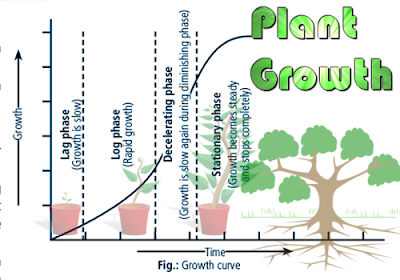
Q5: How plant growth is categorised?

Saturday, 16 June 2018

CBSE Class 9 - Geography - India: Size and Location (Very Short Questions and Answers)(#cbsenotes)(#eduvictors)

India: Size and Location 

(Very Short Questions and Answers)
CBSE Class 9 - Geography - India: Size and Location (Very Short Questions and Answers)(#cbsenotes)(#eduvictors)


Q1: Indian Standard Time or I.S.T. is how many hours ahead or behind of G.M.T. or Universal Time?

Answer: 5 hrs.30 min. ahead of G.M.T.


Q2: Which Canal has reduced India’s distance from Europe by 7000 km?

Answer: Suez Canal


Q3: The Standard Meridian of India, 82°30’E passes through which place in UP?

Answer: Mirzapur in Uttar Pradesh


Q4: From Arunachal Pradesh to Gujarat, there is a time lag of.....

Answer: 2 hours


Q5: Approximately what is the latitudinal and longitudinal extent of the mainland of India?

Answer: 30°


Friday, 15 June 2018

CBSE Class 12 - Physics - Wave Optics - Important Theory Questions (#cbsenotes)(#eduvictors)

Wave Optics

(Important Theory Questions)

CBSE Class 12 - Physics - Wave Optics - Important Theory Questions (#cbsenotes)(#eduvictors)

Q1. Define wave front. State Huygens principle and verify Snell’s law.

Q2. State Huygens principle and prove the laws of reflection on the basis of wave theory.

Q3. What do you mean by interference of light? Explain in brief the Young’s double slit experiment.

Q4. What are the coherent sources? Write the conditions for the sustained interference pattern. Also draw the intensity v/s path difference curve.


Thursday, 14 June 2018

CBSE Class 9 - History - Chapter 3 - Nazism and the Rise of Hitler (Very Short Q and A)(#cbsenotes)(#eduvictors)

 Nazism and the Rise of Hitler 

 (Very Short Q and A)

CBSE Class 9 - History - Chapter 3 - Nazism and the Rise of Hitler (Very Short Q and A)(#cbsenotes)(#eduvictors)


Q1: Why did Helmut’s father kill himself in the spring of 1945?

Answer: He feared revenge by the Allied Powers


Q2: What is referred to as Fascism in History?

Answer: Fascism was first propagated by Benito Mussolini. Under the Fascist system power of the state is vested in one person or a group of persons.


Q3: Why did the Nuremberg Tribunal sentence only 11 Nazis to death for such a massive genocide?

Answer: The Allies did not want to be harsh on defeated Germany as they had been after World War I


Tuesday, 12 June 2018

CBSE Class 9 - English Literature - Chapter 2 - The Sound Of Music (Q and A) (#cbsenotes)(#eduvictors)

The Sound Of Music 

(Q and A)
CBSE Class 9 - English Literature - Chapter 2 - The Sound Of Music (Q and A) (#cbsenotes)(#eduvictors)

Answer these questions in a few words or a couple of sentences each.

Q1. How old was Evelyn when she went to the Royal Academy of Music?

Answer: Evelyn was seventeen years old when she went to the Royal Academy of Music in London.


Q2. When was her deafness first noticed? When was it confirmed?

Answer: Her deafness was first noticed by her mother when Evelyn was eight years old. She was once waiting to play the piano. When her name was called, she did not move. That was when her mother realized that Evelyn had not heard anything. Her deafness was confirmed when she was eleven. Her marks had deteriorated and her headmistress had urged her parents to take her to a specialist. It was then discovered that gradual nerve damage had severely impaired her hearing.


CBSE CLASS 11 - ECONOMICS - CHAPTER-7 EMPLOYMENT – GROWTH, INFORMALISATION AND RELATED ISSUES (Q and A)(#cbsenotes)(#eduvictors)

EMPLOYMENT – GROWTH, INFORMALISATION AND RELATED ISSUES 

(Q & A)
CBSE CLASS 11 - ECONOMICS - CHAPTER-7 EMPLOYMENT – GROWTH, INFORMALISATION AND RELATED ISSUES (Q and A)(#cbsenotes)(#eduvictors)

Q1: Who is a worker?

Answer: People work for earning their livelihood. A person who is involved in production activity contributing to the flow of goods and services in the economy is called a worker. In other words, a worker is regarded as an economic agent who contributes to the production of goods and services, thereby, to the GDP during a particular year. A worker renders services to others and receives rewards in the form of wages, salaries or in kind. Hence, we can say that when an individual is engaged in a production activity or self-employed and contributes to the generation of GDP, then, that person is referred to as a worker. For example, a doctor, an engineer working in a factory, etc.


Q2: Are the following workers — a beggar, a thief, a smuggler, a gambler? Why?

Answer: No, a beggar, a thief, a smuggler, a gambler cannot be called as workers. A worker is involved in a production activity that contributes to the GDP of a country. As none of them (a beggar, a thief, a smuggler and a gambler) are involved in any legal economic production activity that contributes to the national income of the country, hence, none of them can be regarded as workers.

CBSE Class 9 - History - SOCIALISM IN EUROPE AND THE RUSSIAN REVOLUTION CONCEPTS THE AGE OF SOCIAL CHANGE (Very Short Q and A) (#cbsenotes) (#eduvictors)


SOCIALISM IN EUROPE AND THE RUSSIAN REVOLUTION CONCEPTS THE AGE OF SOCIAL CHANGE 


(India and The Contemporary World - I)
(Very Short Q and A)

CBSE Class 9 - History - SOCIALISM IN EUROPE AND THE RUSSIAN REVOLUTION CONCEPTS THE AGE OF SOCIAL CHANGE (Very Short Q and A) (#cbsenotes) (#eduvictors)


Q1: The people who wanted to put an immediate end to the existing governments in Europe(in 1815) were called ...

Answer: Revolutionaries


Q2: Who were radicals?

Answer: They wanted a nation which tolerated all religions. They argued for an elected Parliamentary government, subject to laws interpreted by a well-trained judiciary that was Independent of rulers and officials. They were not Democrats.


Q3: By the mid-19th century in Europe, the idea which attracted widespread attention on the restructuring of society was ________.

Answer: Socialism


Q4: Who was the ruler of Russia before October 1917 revolution?

Answer: Tsar Nicholas II.


Q5: Who conspired in Italy to bring about a revolution?

Answer: Giuseppe Mazzini

Monday, 11 June 2018

Class 11/10/9/8 - Chemistry - Uses of Gases (Worksheet) (#eduvictors)(#cbsenotes)

Uses of Gases 

(Worksheet)
Class 11/10/9/8 - Chemistry - Uses of Gases (Worksheet) (#eduvictors)(#cbsenotes)

Fill the blanks:

1. The gas that can be used to fill party balloons is _______.

2. The gas that is used to make flash light is _______ .

3. The gas widely used in advertisement signs is _______.

4. The gas present in tungsten bulb is _______.

5. The gas present in the universe is _______.

CBSE Class 8 - Science - Microorganisms - Friends Or Foes (Questions and Answers) (#cbsenotes)(#eduvictors)

Microorganisms – Friends or Foes (Q & A-2)

Class 8 – Science – Microorganisms – Friends or Foes (Worksheet) (#cbseNotes)

Q1: Fill in the blanks:
a. Microorganisms may be unicellular or ___________.

b. __________ bacteria help to make curd from milk.

c. Disease-causing microorganisms are called _______.

d. Ammonium salt in the soil is converted first into nitrites by _________ bacteria.

e. _______ coagulation takes place only when milk is hot.

f. Salting draws out _______ from food.

g. Nitrate in the soil is converted by _________ bacteria into nitrogen gas.

h. The process of preventing food spoilage by chemical or physical methods is called food ________.

Answer:
a. Multicellular
b. Lactobacillus
c. pathogens
d. Nitrifying
e. Casein
f. water
g. denitrifying
h. preservation

CBSE Class 12 - Physics - Ray Optics - Important Theory Questions (#cbsenotes)(#eduvictors)

Ray Optics

(Important Theory Questions)
CBSE Class 12 - Physics - Ray Optics - Important Theory Questions (#cbsenotes)(#eduvictors)


1. Derive mirror formula for a concave mirror and convex mirror.

2. Derive an expression for lateral shift and normal shift. On what factors these depend.

3. Define TIR and write the conditions for TIR. Derive a relation between critical angle and the refractive index of the medium. Also explain the working of isosceles prism and optical fiber.

4. Derive the following relation for a real image formed by a convex refracting surface when the object is placed in rarer medium. Also write the assumptions and sign convention used.

μ₂ / v - μ₁/u = (μ₂ - μ₁) / R

Thursday, 7 June 2018

CBSE Class 10/ Class 9 English Grammar - Editing Exercise - 5 (#cbsenotes)(#eduvictors)

EDITING EXERCISE

CBSE Class 10/ Class 9 English Grammar - Editing Exercise (#cbsenotes)(#eduvictors)

Following are the editing exercises appeared in Class 10 Board examination papers.

Q1. The following passage has not been edited. There is one error in each line. Underline each error and write your correction in the space provided. The first correction has been done as an example. (4 marks)

The Davis Cup is an beautiful silver punch ____a____
bowl of engravings in gold. This trophy was _________
gifted in the United States Lawn Tennis Association _________
by the well known American tennis player, D.F. Davis on 1990. _________
The Davis Cup is a world championship who _________
go on practically throughout the year. The top _________
16 tennis nation form the World Group _________
and compete among one another. The losing teams _________
is eliminated like in any other normal championship. _________


Wednesday, 6 June 2018

CBSE Class 10 - Social Science - Online Quizzes Available (#cbsenotes)(#eduvictors)

Class 10 - Social Science Online Quizzes

CBSE Class 10 - Social Science - Online Quizzes Available (#cbsenotes)(#eduvictors)


Online Quizzes (MCQs) are available for the following chapters:

1. The Rise of Nationalism in Europe.

2. The Age of Industrialisation

3. Popular Struggles and Movements

4. Our Environment - Quiz-1, Quiz-2

CBSE Class 10 - Maths - Real Numbers (NCERT Exemplar Solutions Ex 1.1 Q4-6) (#cbsenotes)(#eduvictors)

Real Numbers 
(NCERT Exemplar Solutions Ex 1.1)

CBSE Class 10 - Maths - Real Numbers (NCERT Exemplar Solutions Ex 1.1 Q4-6) (#cbsenotes)(#eduvictors)

Question 4:
If the HCF of 65 and 117 is expressible in the form 65m − 117, then the value of m is
(A) 4
(B) 2
(C) 1
(D) 3

Answer: (B) 2

Explanation:
Using Euclid’s division algorithm,
b = aq + r, 0 ≤ r < a [∵ dividend = divisor × quotient + remainder]
⇒ 117 = 65 × 1 + 52
⇒ 65 = 52 × 1 + 13
⇒ 52 = 13 × 4 + 0
∴ HCF (65, 117) = 13 .... (i)

Also, given that, HCF (65, 117) = 65m – 117 ... (ii)

From Equations (i) and (ii), we get
65m − 117 = 13
⇒ 65m = 130
⇒ m = 2


Class 9/ Class 10 - English Grammar - Determiners - Rules To Remember (#cbsenotes)(#englishgramar)(#eduvictors)

Rules to Remember (about Determiners)

Class 9/ Class 10 - English Grammar - Determiners - Rules To Remember (#cbsenotes)(#englishgramar)(#eduvictors)

1. A, An, The
A and an are used before countable Singular Nouns. A is used before a word beginning with a consonant sound, while an is used before with a vowel sound ; as,
A pen is to write with.
An elephant is a huge animal.
Our hen laid an egg today.
The is a weakened form of that : The is used to particularise a person or a thing ; as,
Bring me the book lying on the table.
The dish you prepared was very delicious.

2. This, That, These, Those
This, that, these and those point to objects denoted by the Nouns that follow them ; as,

This man is a raw villager.
That horse runs very fast.
These mangoes are very sweet.
Those girls must be rewarded.

This and these point to the objects which are near, while that and those point to the distant objects.

Sunday, 3 June 2018

Class 9 English - The Road Not Taken ( Questions and Answers)(#cbsenotes)(#eduvictors)

The Road Not Taken

Q & A
Class 9 English - The Road Not Taken ( Questions and Answers)(#cbsenotes)(#eduvictors)
The poem is a metaphor about the dilemma of making decisions that we have to make in our lives.

PoetRobert Frost (March 26, 1874 – January 29, 1963)

Q1: Where does the traveller find himself? What problem does he face?

Answer: The traveller finds himself standing and waiting before the two diverged roads in the yellow wood. Robert Frost feels confused and faces the problem in deciding the appropriate road to be travelled on. Both the roads seem fair to him but it is difficult for him to determine which road can lead to his favour. Metaphorically, the poet is in the dilemma state of choosing the right choice for his future endeavours. 

CBSE Class 10 - Maths - Real Numbers (NCERT Exemplar Solutions Ex 1.1 Q1-3) (#cbsenotes)(#eduvictors)

Real Numbers (NCERT Exemplar Solutions Ex 1.1)


CBSE Class 10 - Maths - Real Numbers (NCERT Exemplar Solutions Ex 1.1 Q1-3) (#cbsenotes)(#eduvictors)


Question 1:
For some integer m, every even integer is of the form

(A) m
(B) m + 1
(C) 2m
(D) 2m + 1


Answer: (C) 2m

Explanation:
Even integers are -4, -2, 0, 2, 4, 6 ...
Let m = integers[Since, here integer is represented by m]
such that m = ⋯ , −1, 0, 1, 2, 3, ...
∴ 2m = ⋯ , −2, 0, 2, 4, 6, ...
∴ even integers can be represented in the form of 2m